Uoroku Co., Ltd.
Uoroku is a supermarket chain that originated in Shibata City, Niigata Prefecture, and operates 46 stores within Niigata Prefecture (as of the end of August 2026). Amid sharply rising energy prices, cutting costs by improving the operation of stores’ electrical systems had become an important task for management. In response, Hitachi Power Solutions has developed an Integrated Platform that visualizes not only energy usage but also equipment operating status, and proposes ways to optimize investment plans through improved equipment operation and predictive maintenance. We aim to use reductions in electricity costs as a stepping stone toward improving facility operation efficiency.
“It began in 2022 with a surge in electricity market prices caused by the situation in Ukraine. In response, we launched an energy-saving campaign and began sending out weekly reports that visualized each store’s electricity usage. As a result, each store began turning off lights and adjusting air conditioning temperatures, and we started to see reductions in electricity costs. Back then, however, the only data available was the total amount of electricity used, so even if the figure jumped from the previous year, it was difficult to determine whether the cause was a rise in air temperature, or the temperature settings of the refrigeration and freezing equipment. Gradually, we ran out of ways to conserve electricity, and we were no longer able to achieve any noticeable results.”
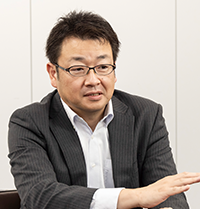
Mr. Gawasawa of the Development Department has a resume that includes switching careers in 2020 from the construction industry to the distribution and retail sector, where he had no prior experience. Licensed as a First-Class Architect, a national qualification for architects in Japan, he was responsible for designing new stores and renovations, and he recognized the need for comprehensive management of facilities and energy. However, labor shortages have become the norm in the retail industry, and it was particularly difficult to recruit personnel with skills in facilities maintenance and DX (digital transformation).
“The operating profit margin for supermarkets is generally around 1 to 3 percent. Since electricity costs amount to 1 to 2 percent of sales revenue, simply accepting increases in electricity bills could eliminate a majority of the company’s profits. When it came to fixed costs, we felt that we needed to create a system that could minimize the burden on store-level staff as much as possible, while ensuring that we in the Management Department maintained firm control in order to secure profits.”
After conducting interviews to understand Uoroku’s challenges and business model, Hitachi Power Solutions proposed its Energy & Facility Management as a Service (EFaaS). Based on a platform that integrates the management of energy and facility data, this service offers energy management, which visualizes, analyzes, and optimizes energy consumption, and facility management, which supports the lifecycles of facilities, on a service model.
“I had never heard of a platform that allowed integrated management of both energy and facilities, in any other company’s proposals.
While our most immediate challenge has been energy management, facility management is also essential. The phrase ‘Let’s build business intelligence,’ which was mentioned in the initial proposal, really made an impression on me. The AI not only converts the necessary management metrics into data, but also analyzes and interprets them, visualizing the results as graphs and charts that are intuitively easy to understand. Also, building the platform in the cloud means we can easily and flexibly make modifications and add new features. We decided to implement this system because we could keep initial investment costs low, incorporate new insights as we go along, and keep on refining the system. That approach aligned perfectly with our company’s needs.”